
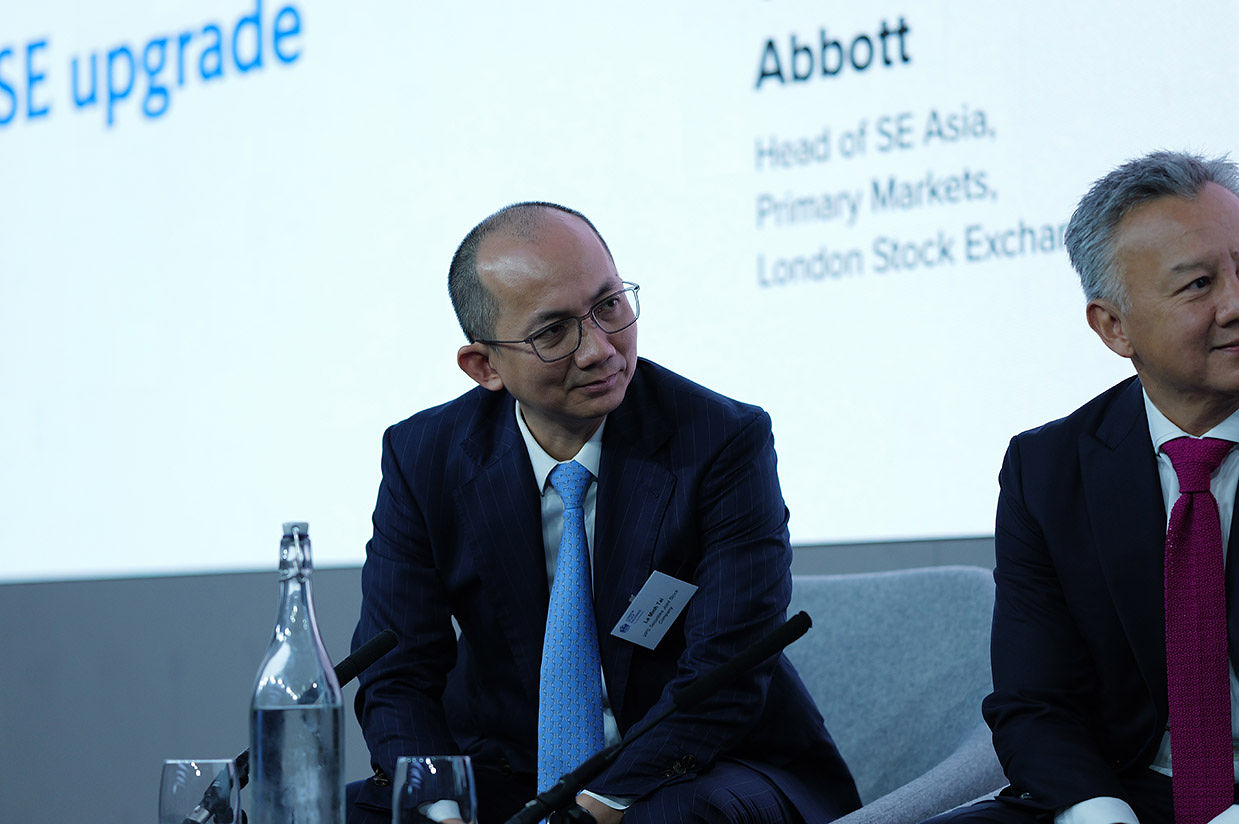
Speaking at Viet Nam Capital Markets Day in London, VPS Securities CEO Le Minh Tai emphasised that the FTSE upgrade would not only deepen Vietnam’s integration into global capital flows but also help raise market standards, encourage long-term investment and turn market liquidity into capital formation for economic growth.
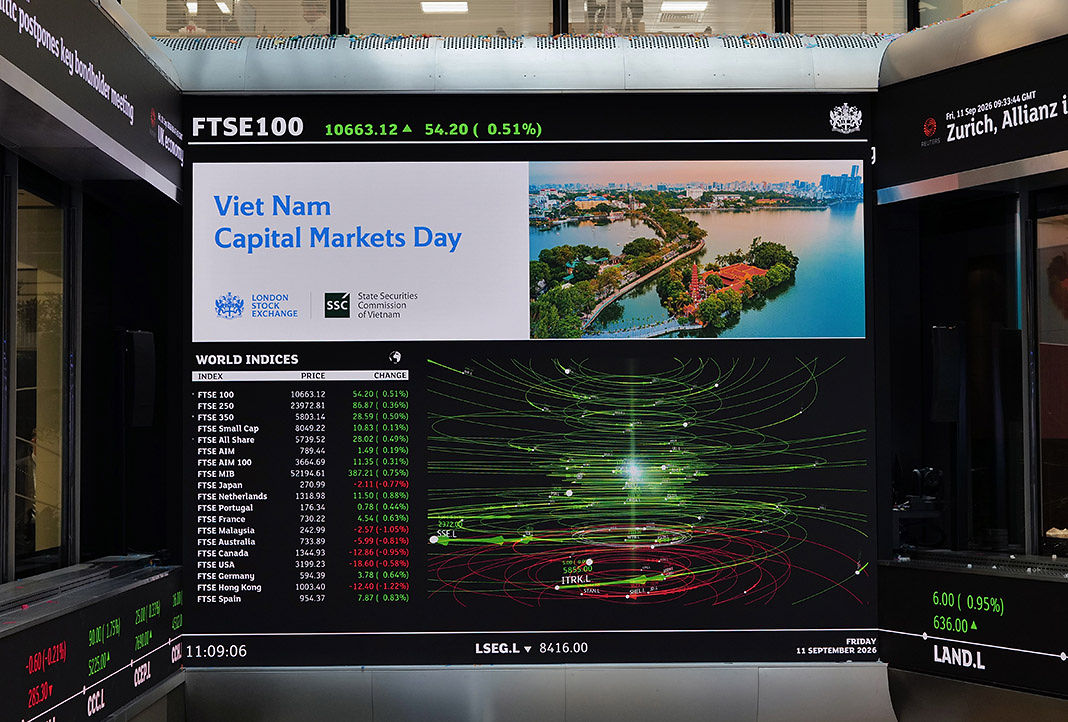
On 11 September, the State Securities Commission of Vietnam and London Stock Exchange Group jointly hosted Viet Nam Capital Markets Day at the London Stock Exchange. The event brought together policymakers, issuers, investors and market infrastructure providers to discuss Vietnam’s evolving role in global capital markets and the international opportunities ahead.
Attendees included Ms. Dame Julia Hoggett, CEO of London Stock Exchange; Mr. Nguyen Duc Chi, Vice Minister of Finance; Ms. Vu Thi Chan Phuong, Chairwoman of the State Securities Commission (SSC); and representatives of regulatory authorities, financial institutions and businesses from Vietnam and the United Kingdom.
One of the sessions focused on the transformation of Vietnam’s capital market and the implications of its FTSE upgrade. VPS Securities CEO Le Minh Tai joined the discussion and shared his perspective on the outlook for Vietnam’s market as it enters a new phase of development.
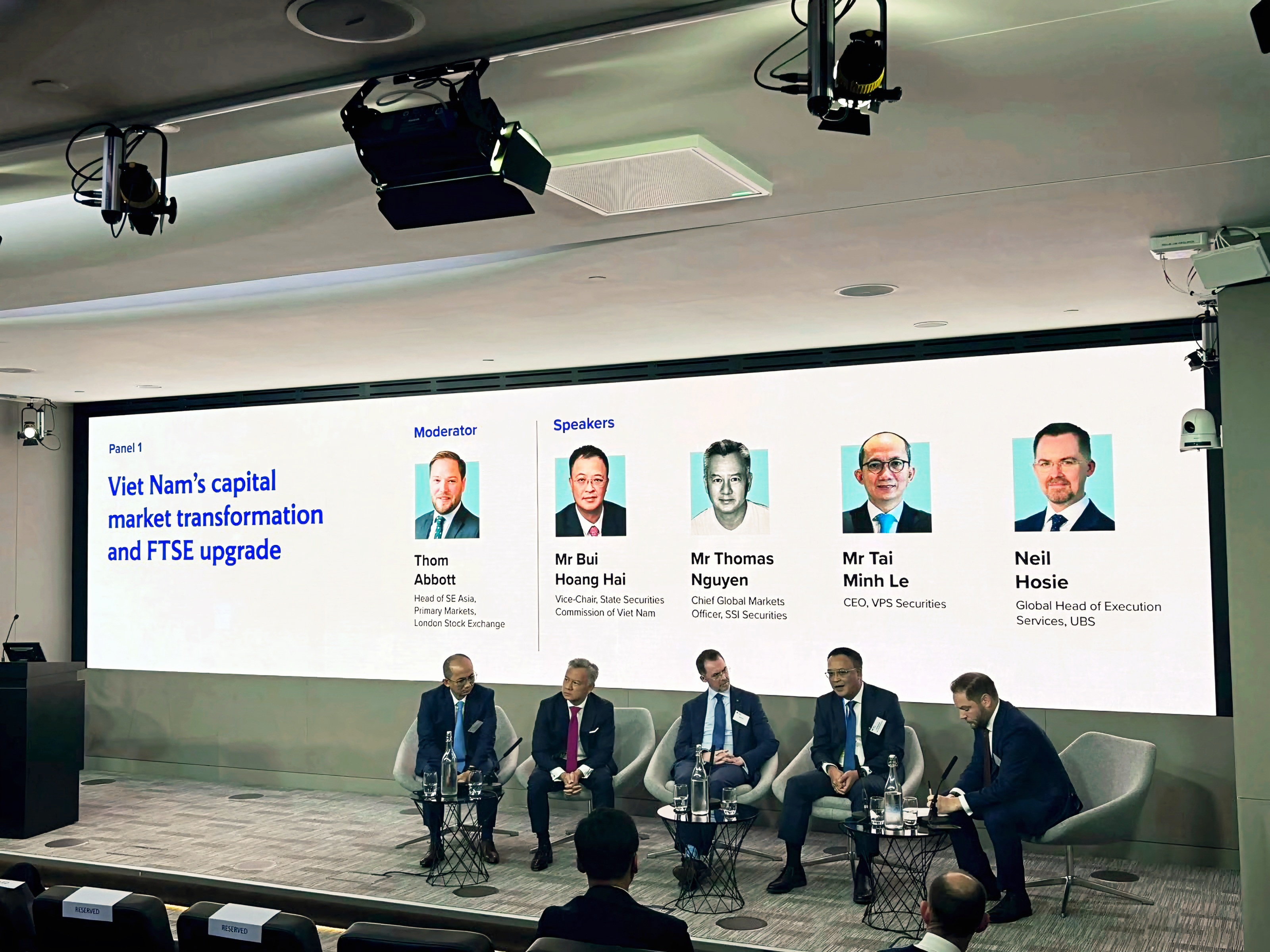
According to Mr. Tai, the upgrade will broaden Vietnam’s visibility among global institutions. Passive flows from index-tracking funds will be one of the most immediate effects, but they are not the most important consequence. More fundamentally, Vietnam will increasingly move from the frontier-market universe into the emerging-market allocation process, attracting greater attention from active emerging-market funds, larger institutional investors and global asset allocators.
“There will be passive flows associated with FTSE index inclusion, but I would be careful not to reduce the impact to one estimate of inflows,” Mr. Tai said.
In his view, FTSE inclusion will have two effects: an immediate impact on visibility, flows and the investor base, and a structural impact by accelerating Vietnam’s integration into global emerging markets. It will also create momentum and a stronger foundation for the country’s longer-term objective of achieving MSCI Emerging Market status. However, FTSE inclusion does not automatically lead to MSCI status, as the two classifications have different methodologies and requirements.
The upgrade will also change the benchmark against which Vietnam is judged. As Vietnamese companies increasingly compete for capital with businesses across emerging markets, free float, liquidity, governance, disclosure and investor relations will become more important in determining their ability to attract long-term capital.
Momentum Towards a More Mature Capital Market
Retail investors account for a large share of trading activity and remain an important part of Vietnam’s securities market. According to the VPS CEO, the next-stage challenge is not simply to continue expanding the investor base, but also to create more ways for retail capital to participate in a systematic and long-term manner. As the market develops, demand for transparent, diversified and disciplined investment solutions is also expected to grow.
This was one of the reasons VPS introduced VPS Smart Indexing. The solution gives retail investors access to a diversified, systematically managed portfolio while allowing them to retain direct ownership of the underlying stocks. Mr. Tai said the encouraging initial response showed that Vietnamese investors were open to new ways of investing when the solution was simple, transparent and relevant to their needs.
“So we may see Vietnam institutionalise from both directions: more global institutions entering the market, while domestic retail capital increasingly adopts more systematic and institutional ways of investing,” Mr. Tai said.
The new environment will also require local securities firms to evolve. While the first phase of technology development was largely about access and execution, the next phase is much broader. At VPS, technology will increasingly connect market data and intelligence with research, risk management, institutional execution and connectivity with global brokers and international investors.
The opportunity extends beyond the secondary market. A larger institutional investor base can increase the market’s capacity to absorb new equity issuance, supporting a stronger pipeline of IPOs, new listings, state-owned enterprise equitisation and divestment. In turn, a broader supply of high-quality assets will expand the investable universe available to international investors and give them more reasons to establish a sustained presence in Vietnam.
Mr. Tai noted that Vietnam needs to continue expanding both the scale and depth of market liquidity. More importantly, the next phase is to turn that liquidity into capital formation for the economy. As secondary-market liquidity increasingly supports IPOs, new equity issuance and the introduction of more high-quality companies to the public market, Vietnam’s capital market can play a much larger role in financing long-term economic growth.
From London, Vietnam’s opportunity therefore extends beyond attracting more international capital. The FTSE upgrade can become a catalyst for broadening the investor base, improving market liquidity, expanding the supply of investable assets and building a deeper, more institutional and more investable capital market—one that connects Vietnam more closely with both global capital and global market standards.
